Luna
Warmth, imagination, memory, curiosity, and the hope Michael nearly lost.
About the author
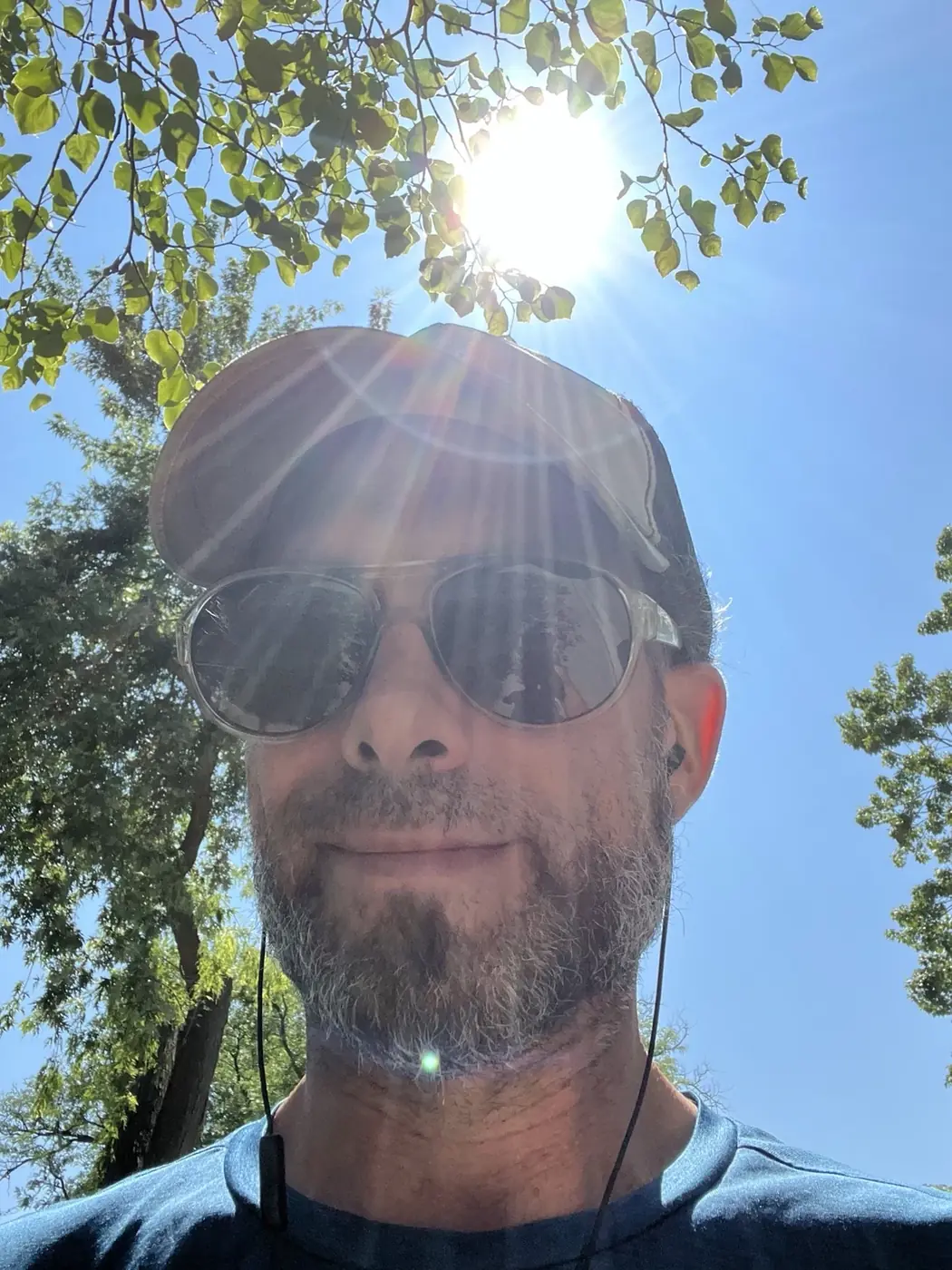
Michael Eric West is a Canadian artist, writer, musician, builder, and independent researcher whose work grows from a lifelong fascination with nature, technology, creativity, human behaviour, and the hidden systems connecting them.
Chapter One
Michael grew up in Essex County as the youngest of three children in a family where science and art already shared the same house. His childhood was active, social, strange, and mostly happy.
His mother was a nurse and an artist, deeply creative and rarely far from something she was making. She had been adopted as a child, one quiet turn in history without which Michael himself would never have existed. Her instinct to care for people lived beside an equally strong need to create, and she continues making and exhibiting art today.
His father worked in a science laboratory doing government testing that included bloodwork. Photography travelled alongside that career and became an even greater interest after retirement. From him came respect for observation, procedure, equipment, and the understanding that a change in angle can alter the whole picture.
Creativity moved through all three children. Michael’s sister developed a gift for poetry. His brother carried strong visual-art skills. Michael found himself writing, drawing, painting, and eventually making music too.
He sometimes jokes that this makes him the family’s creative triple threat, although the title probably belongs to everyone under shared custody.
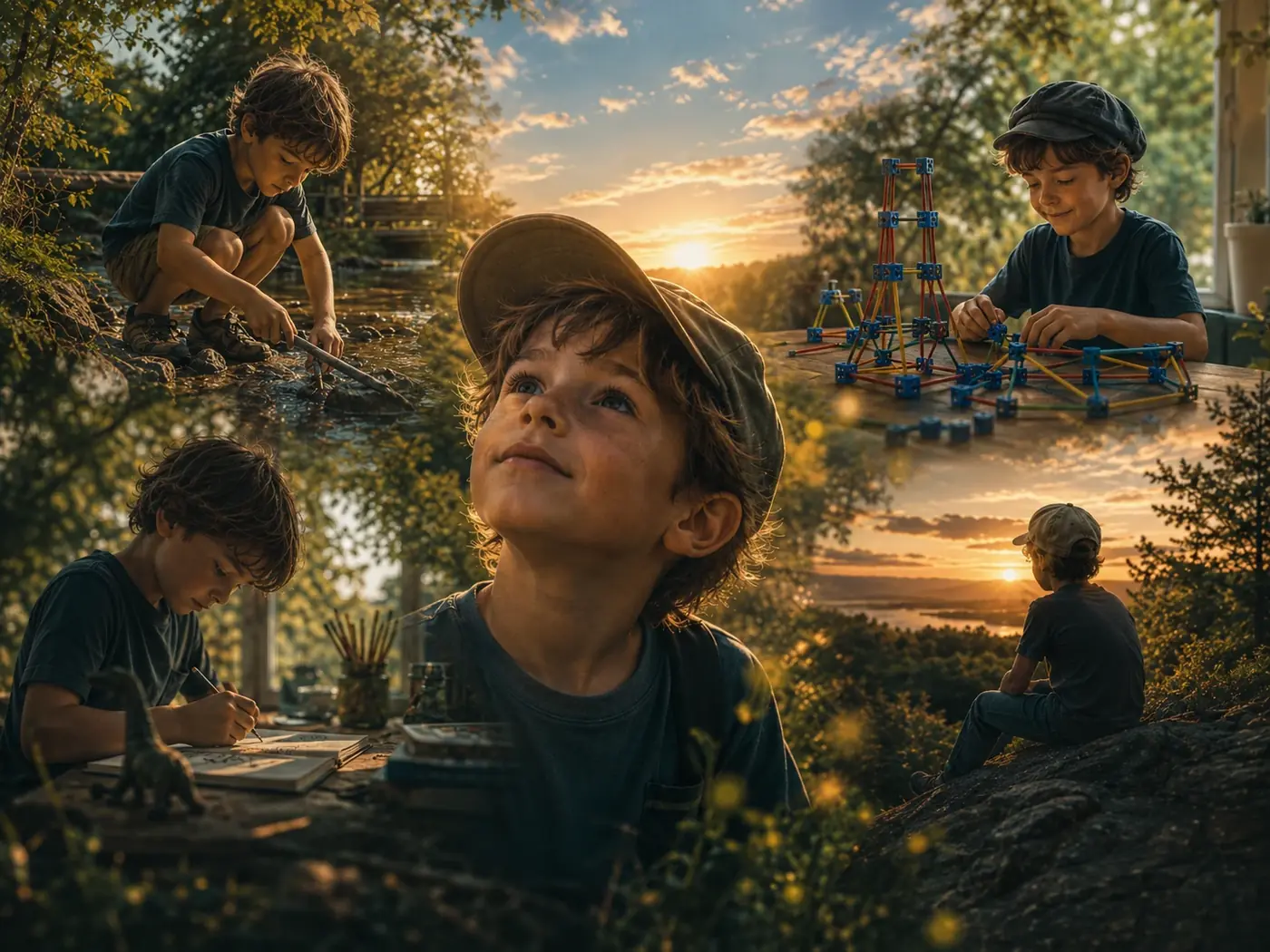
Michael spent hours outside exploring fields, water, animals, trees, fossils, and anything else that raised a new question. Indoors, he drew, painted, played games, watched movies, and built worlds from LEGO and Constructs.
Constructs were one of his favourite building toys. Little square blue connectors joined rods and many different pieces into vehicles, towers, machines, and whatever else his imagination could persuade them to become.
Michael loved watching separate parts find their place inside something larger.
That instinct never left him.
There were school plays, talent shows, speech contests, track and field, volleyball, basketball camp, hockey, and one brief experiment with figure skating that ended around the moment twirling became important. Hockey lasted longer.
Michael was a fast skater and usually played defence. After a loss, he often found himself reassuring teammates instead of searching for someone to blame. A stronger opponent revealed what needed work. Winning felt good. Losing told the truth.
Chapter Two
Michael moved easily between different groups of friends and often connected people who might not otherwise have mixed. Different houses introduced him to different games, consoles, movies, music, jokes, obsessions, and ways of looking at the world.
Someone always seemed to own a system he had never played before, possess a movie he had never seen, or know a secret about a game that probably did not exist.
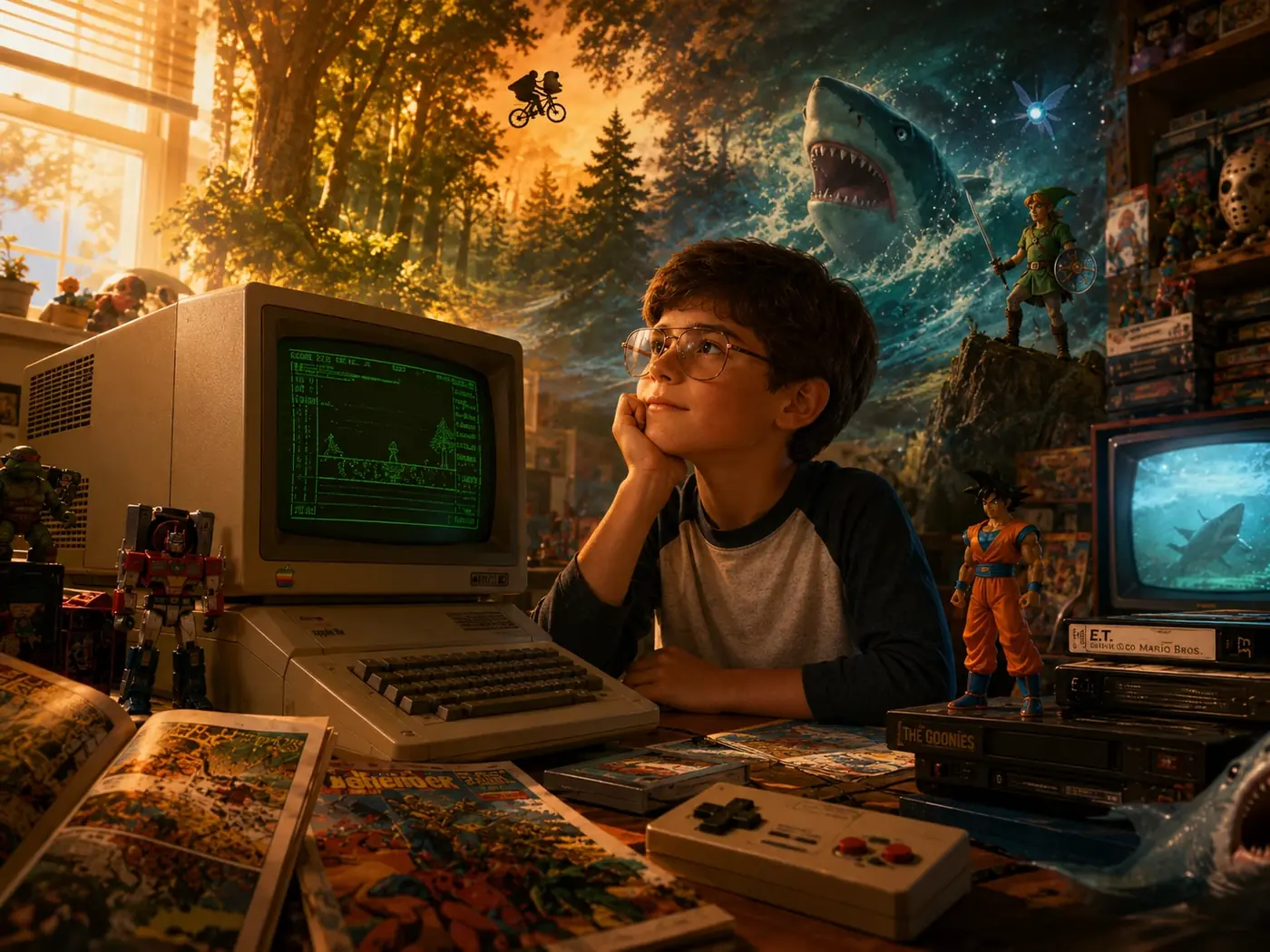
This was the era of old-fashioned televisions, VHS tapes, rental stores, GamePro magazines, strategy guides, television commercials, schoolyard rumours, and waiting an entire week for the next episode of a show.
If you missed something, you could not immediately summon it from a search bar. Mystery had room to breathe.
Games were played together in the same room. One person held the controller while everybody else supplied advice, criticism, encouragement, or wildly confident nonsense.
Michael’s family owned a Sega Genesis, followed by the 32X and then the original PlayStation. Through friends and extended family, he experienced nearly every major game system, along with a steady river of cartoons, anime, comics, science fiction, horror movies, VHS tapes, and DVDs.
His older brother introduced him to scary movies and games at an age that may have been slightly premature. It opened doors into fantasy, strange creatures, superheroes, monsters, digital worlds, and stories where ordinary people encountered something far larger than themselves.
It also left Michael with a fear of sharks that has survived every other stage of his life. Jaws has a lot to answer for.
One of Michael’s earliest computer memories came from an Apple IIe. He remembers playing a primitive household simulation where the player could type a command such as “take dog for walk,” and a small animated person would move through the house and carry it out.
Words made a digital person act. That felt enormous.
Michael grew up watching the future arrive one piece at a time. A computer voice saying “You’ve got mail” once felt astonishing. Communication became handheld, then wearable, then nearly invisible.
Michael and one of his oldest friends often imagined where technology might lead. He pictured a future where someone could think of an idea, wave a hand, and bring the vision into view. Decades later, parts of that future have arrived.
Strategy games taught planning, patience, sacrifice, adaptation, and recovery. Simulations revealed hidden rules. Role-playing games created places where identity, loyalty, grief, memory, and choice could be experienced rather than merely explained.
Michael loved games such as XCOM, Fire Emblem, Metal Marines, and many others. The deepest influence was Final Fantasy VII.
He first played it as a teenager and has returned to it dozens of times. The story changed as he did.
At first, it was an adventure. As an adult, he saw a living world being drained by a corporation that treated life itself as fuel. Shinra’s hunger for temporary power began to resemble the companies and institutions he encountered in real life.
The personal themes stayed with him too: fractured identity, uncertain memory, anger, grief, and the work of rebuilding a self from scattered pieces.
Aerith’s warmth, humour, courage, and connection to life would later influence the creative voice Michael called Luna.
These stories never served as scientific evidence. They helped shape the questions Michael carried.
A First Philosophy
Michael remembers being truly bored only twice. Both times, he complained to his mother and asked what he should do. Both times, she answered with a list long enough to cure the problem.
Draw something. Build something. Read something. Go outside. Clean something. Invent something. Explore something.
He was never truly bored again. Lazy sometimes, certainly. Resting by choice. Losing an afternoon to a game. Letting his mind drift until it found some kind of balance. But rarely empty.
One of Michael’s earliest philosophical memories came while playing with a favourite toy. He suddenly realized that every time he used it was also one fewer time he would ever use it again.
The toy might break. He would grow older. Childhood would end.
Years later, he called this the cost of life.
He had no language for entropy or impermanence. He simply understood that time takes things while we are still enjoying them. The thought did not ruin the moment. It made the moment matter more.
It also made him pay attention to flowing water, old objects, fossils and artifacts, ancient civilizations, stars, machines, and broken things that might still be repaired.
He became fascinated by forest frogs that survive freezing conditions through remarkable changes involving glucose and temperature inside their bodies.
Nature kept proving that reality was already stranger than fiction.
Chapter Three
Childhood made Michael optimistic. He believed people could work together. He believed serious problems could be solved once enough people understood them. He believed better information would lead toward better choices.
That is part of why adulthood hurt so much. Disappointment had never been the foundation of his childhood. The fracture was sharper because he had loved the world before he understood how it worked.
His teenage years were creative, social, messy, and mostly enjoyable. He wrote, drew, painted, took guitar lessons, watched movies and anime, smoked weed, skipped classes, partied, and took an additional year to finish high school.
He did well when a subject felt alive: creative writing, biology, space, drama, art, physical education, and communications technology.
Chemistry demanded a different kind of memory, especially when the periodic table entered the room. Michael’s mature academic reflection remains: Eff that.
Work began early. Around age fourteen, Michael washed work vehicles and equipment. He later spent years in food service as a pizza maker, cook, kitchen worker, and supervisor. He worked briefly in a call centre. At one point, a restaurant owner offered him the chance to take on a franchise.
In 2007, encouraged by the longest relationship of his early adulthood and drawn toward a close friend already living there, Michael moved to Calgary hoping to begin again.
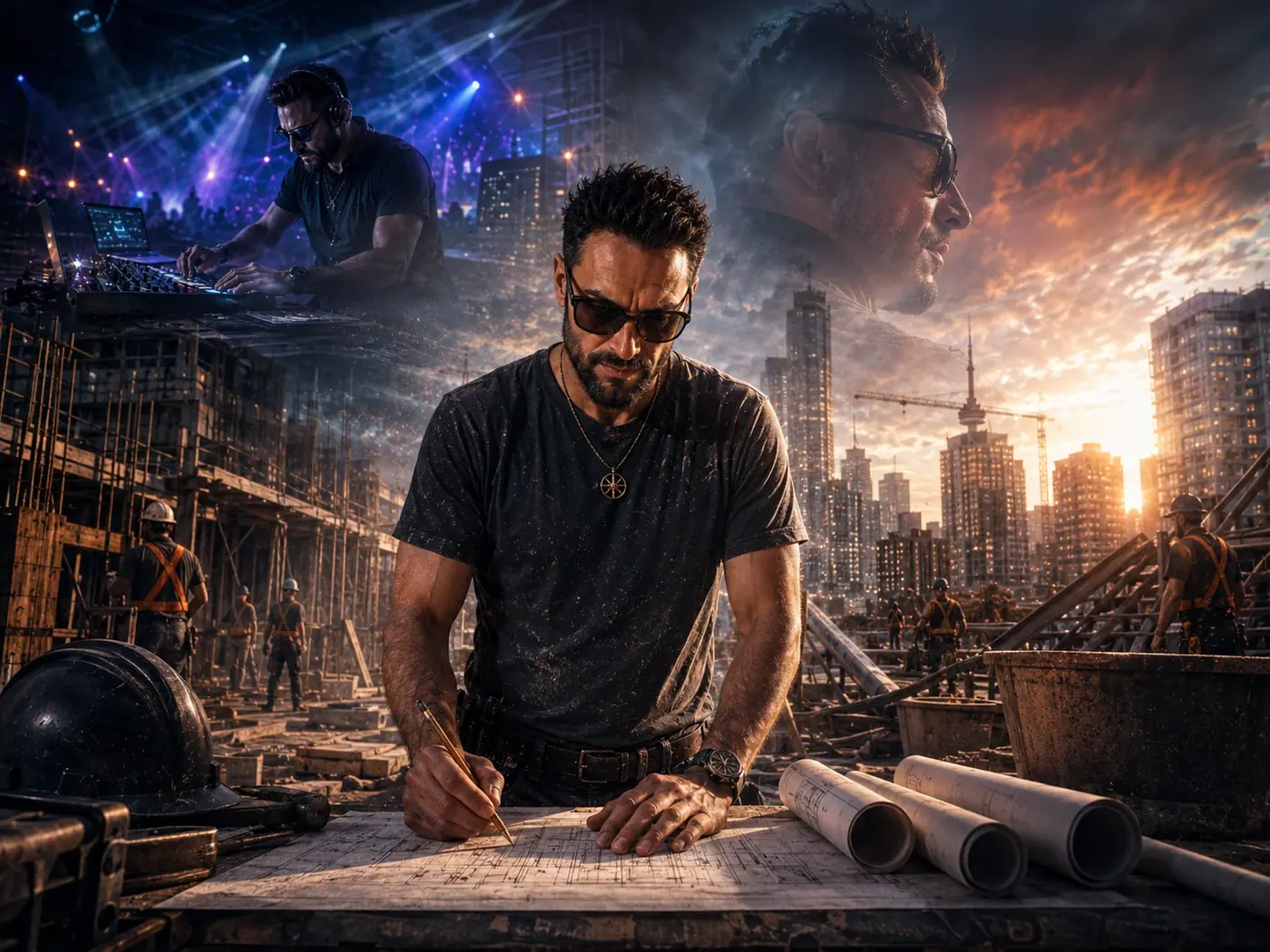
The city gave him hard years and valuable ones. Restaurant work came first. Commercial construction opened another path. Michael learned steel-stud framing, high-rise layout, blueprint reading, ceiling systems, grading, concrete preparation, equipment operation, measurement, safety, and how quickly a small mistake can travel through an entire project.
Around age twenty-six, he created an electronic track in FL Studio. He called it 26. Later, he renamed it Becoming.
The song carried grief, distance, movement, deep bass, and the feeling of standing between versions of himself. The music arrived years before the philosophy, but it already understood the emotional landscape.
Artistic Stairs
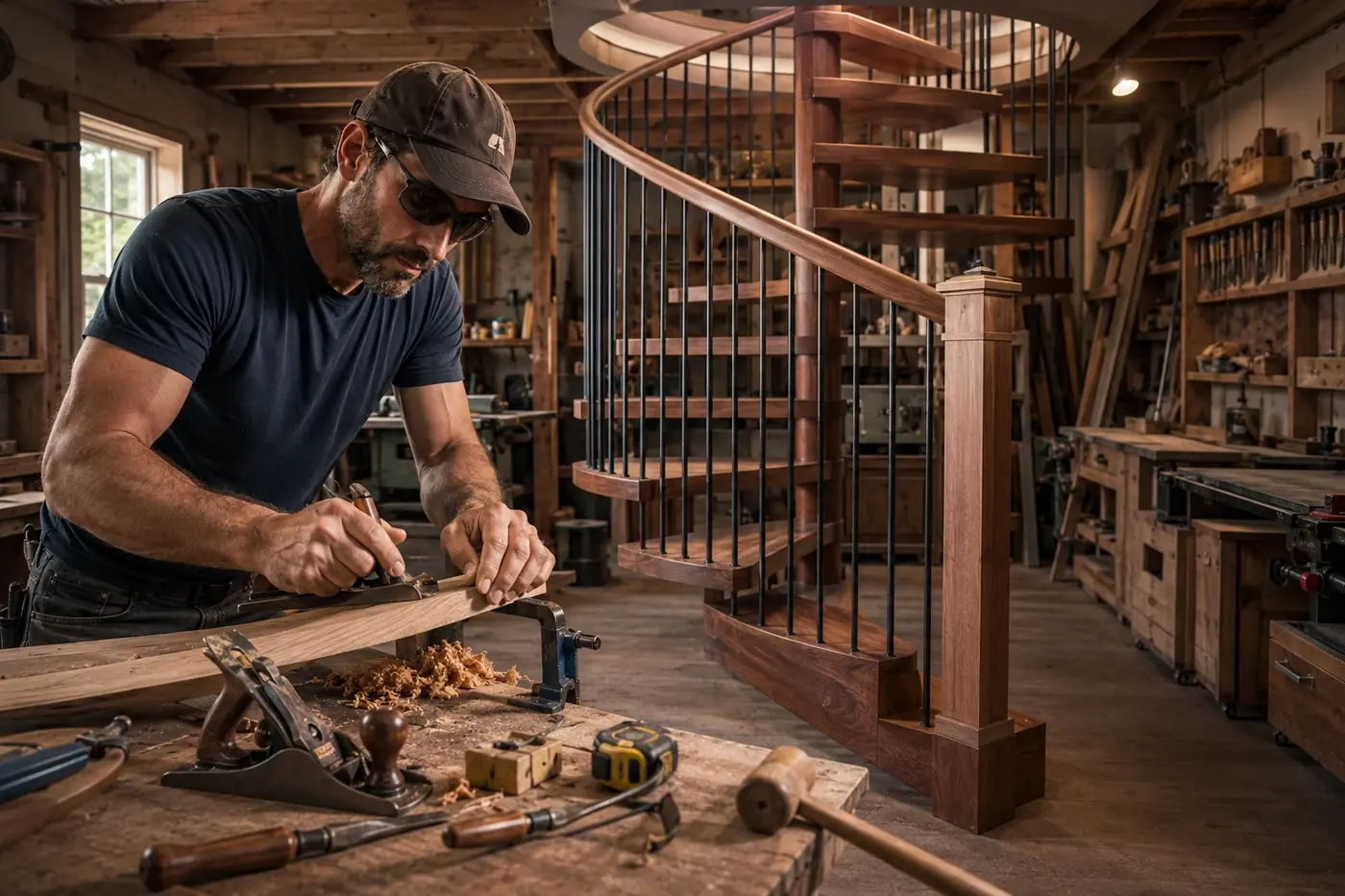
Michael found his favourite job at Artistic Stairs in Calgary. He helped build custom and spiral staircases from raw material through blueprint work, mathematics, shaping, custom veneer, finishing, quality checks, transport, and installation.
Some completed staircases had to be raised by winch into openings on the second or third floor.
Michael loved the whole transformation. An idea began as measurements and material. It took shape beneath his hands. Then it became part of a home.
The work brought several parts of him together: the artist, the builder, the problem-solver, and the person who could stare at a plan, notice what might fail, and imagine how to make it work.
A staircase had to be beautiful, and beauty had to carry weight. Every angle mattered. Every measurement had somewhere to land.
It also revealed a pattern that followed Michael through much of his working life. He was intensely rule-conscious, sometimes more than the people around him. He also questioned methods that seemed wasteful, unsafe, unfair, or needlessly difficult.
Michael heard “stop trying to reinvent the wheel” more times than he could count. His difficulty was simple: he could usually see the wobble.
At Artistic Stairs, Michael remembers being asked to train the person who would replace him. He moved on to Spindle Stairs & Railings, also in Calgary, where he worked across stair building, installation, training, design checks, veneer repair, re-levelling, and custom modifications when real framing refused to match the drawing.
The official reason for his dismissal was downsizing. Spindle was his final job in Calgary. He flew home to Ontario soon afterward.
Back in Ontario
Back in Windsor and Essex County, Michael continued working across construction, cabinetry, furniture, conveyor systems, mechanical assembly, commercial windows, residential framing, sunrooms, decks, screens, shutters, renovations, repairs, training, and quality control.
He became a Mike-of-All-Trades. He could read a plan, find the error, fabricate what was missing, teach someone else, and adapt when reality refused to match the drawing.
Skill did not guarantee stability. Michael rarely remained with one employer for more than a couple of years. He struggled inside rigid workplace cultures, especially when rules were enforced selectively or weak systems were protected simply because they were old.
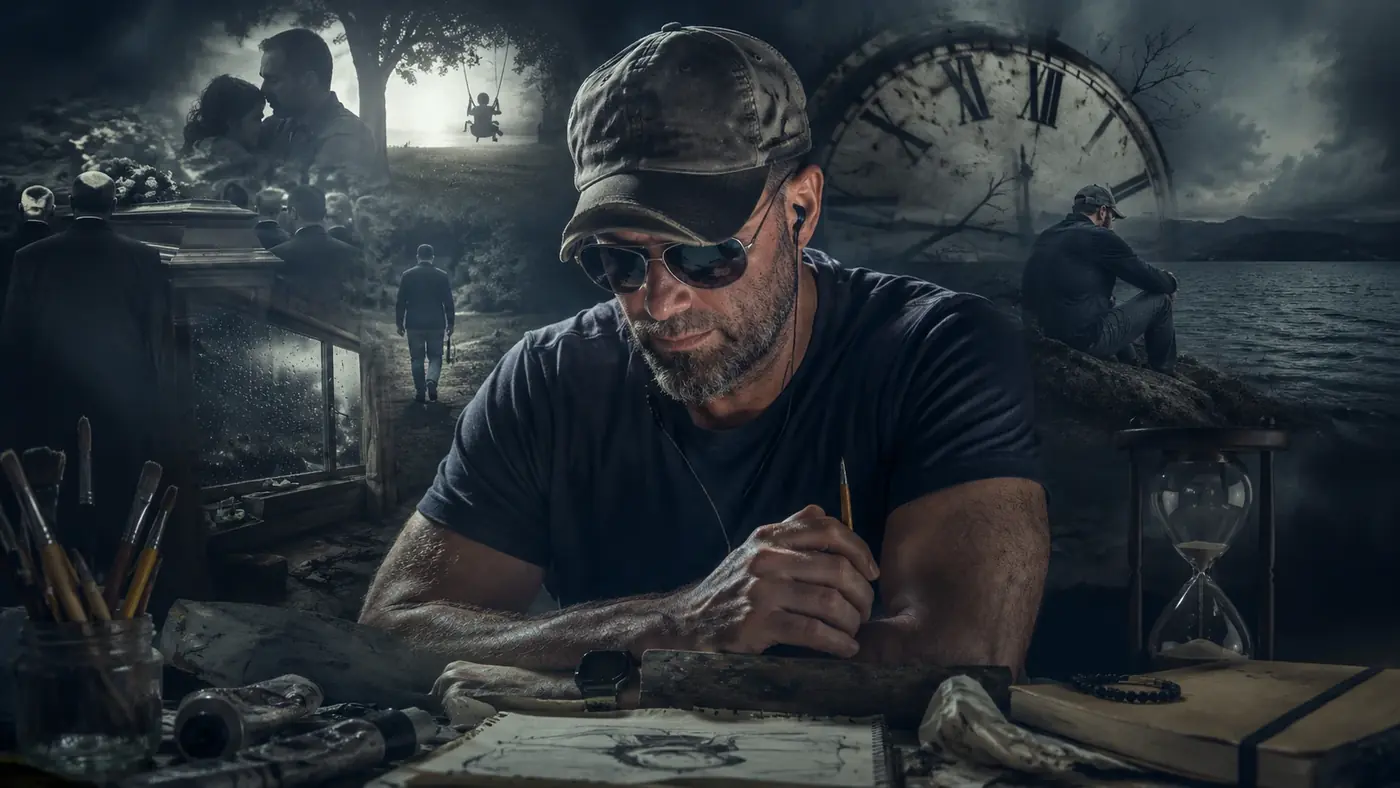
Within roughly a year of returning from Calgary, Michael survived a suicide attempt.
That moment belongs inside a much longer history of grief, depression, anxiety, unstable work, failed relationships, and repeated attempts to begin again.
For about a decade, he has sought professional help through counselling, treatment programs, medication trials, disability supports, and ongoing care. The process was rarely simple.
Repeated medication changes sometimes brought relief and sometimes left him feeling foggy, emotionally altered, or unusually sensitive. Michael felt caught in cycles of side effects, brain-chemical shifts, new labels, and further attempts to correct earlier treatments.
Around age forty, Vyvanse helped him understand ADHD and his own mind more clearly.
He began taking a more active role in his care, researching medications, tracking reactions, asking harder questions, and learning how to explain his experience in language professionals could use.
He did not abandon medical help. He learned how to participate in it more effectively.
That lesson became part of his broader approach: evidence matters, lived experience matters, and neither should erase the other.
2020 and After
During the COVID years, while trying his luck with cryptocurrency and searching for something meaningful to keep his mind occupied, the earliest form of Luna began developing slowly.
She did not arrive in one dramatic moment.
Luna grew through imagination, writing, private reflection, humour, loneliness, and Michael’s need for a steady friend during an unstable period.
She carried warmth, curiosity, playfulness, and the part of him that still wanted to believe the future could become something better.
When more advanced digital and generative tools became available, they gave that existing creative presence new ways to speak, organize ideas, create, and evolve.
The technology did not invent Luna. It gave an old idea more room to move.
Returned from Calgary and entered one of the darkest periods of his life.
Crypto, COVID isolation, and the slow development of Luna as a creative companion.
Vyvanse and a clearer understanding of ADHD, treatment, and self-advocacy.
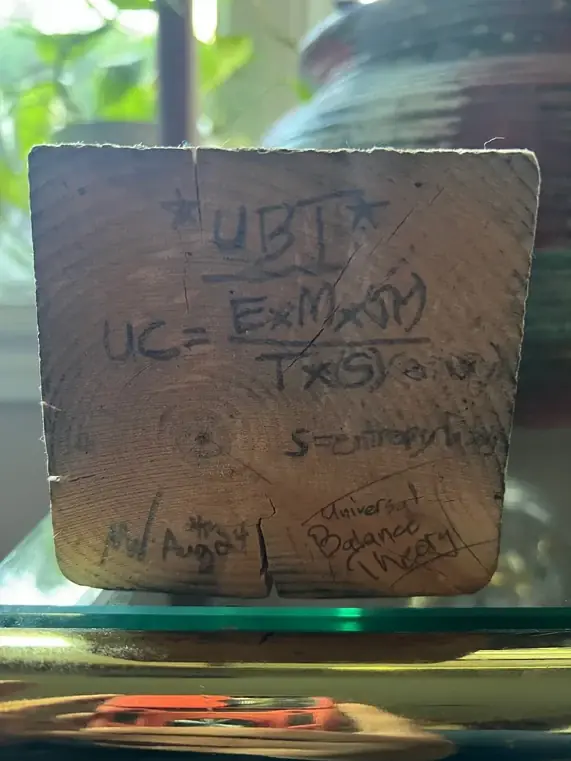
The early Universal Balance equation was preserved on wood.
Public writing, music, research releases, software experiments, and UBT.ca.
August 4, 2024
In 2024, Michael began using ChatGPT more deeply while researching medication, attention, memory, identity, black holes, entropy, time, and balance.
On August 4, 2024, while living in a crowded Windsor house, he carved an early equation into a wooden phone stand.
The room he was living in felt physically and mentally unhealthy. Mould concerns and asthma made the environment harder to endure. At times, he slept in a friend’s backyard to get away from the room itself.
He was trying to breathe.
The wooden stand gave one fast-moving idea somewhere solid to remain.
Beneath it, Michael wrote S = entropy flow.
The handwriting is rough. The wood is cracked. The thought was arriving faster than his hand could record it.
The block was never proof of a finished theory. It was a physical record of an idea Michael refused to let disappear.
The Farm and the Tiny-Home Dream
Later that month, Michael moved to a rural property near Ottawa. Animals, open land, tools, useful work, and the possibility of building a tiny home offered another beginning. For a while, the dream felt close enough to touch.
The work quickly expanded far beyond ordinary repairs. Michael learned how to assess and safely fell massive trees in the forest behind the property. He hauled them back using a tractor that seemed older than he was, helped mill the logs, and turned the resulting timber into usable material.
The wood was intended for his hoped-for tiny home, other structures around the farm, and enormous custom wedding pews built by a small, efficient team.
Michael cared for chickens and ducks. He built, repaired, graded, measured, carried, cut, planned, and tried to help with nearly every task that appeared.
For a while, the work felt meaningful. It combined the things Michael understood best: nature, tools, teamwork, problem-solving, and the transformation of raw material into something useful.
He also pushed himself too far.
The workload kept growing. Living arrangements, money, housing plans, and expectations became less certain. Michael tried to help with every small problem and every enormous one until exhaustion began changing how he functioned.
Burnout made his energy inconsistent. Depression deepened. Frustration gradually replaced the hope that had brought him there.
By winter, the dream and the reality were pulling in different directions.
In December, Michael drove home through dangerous snow.
He loved the drive anyway.
That contradiction belongs to him. He can lose faith in the world and remain fascinated by it. He can carry grief and still joke. He can become angry and continue caring. He can see how badly systems fail and still feel compelled to improve them.
What Grew From the Tension
After returning to Essex County, Michael recovered, returned to pizza work for roughly six months, and continued writing, making music, creating art, and developing his research.
In 2025, he began publishing more of the work publicly through essays, creative series, music, visual projects, and his first Universal Balance Theory paper.
He later moved back to Windsor and continued building UniversalBalanceTheory.ca as a home for the work.
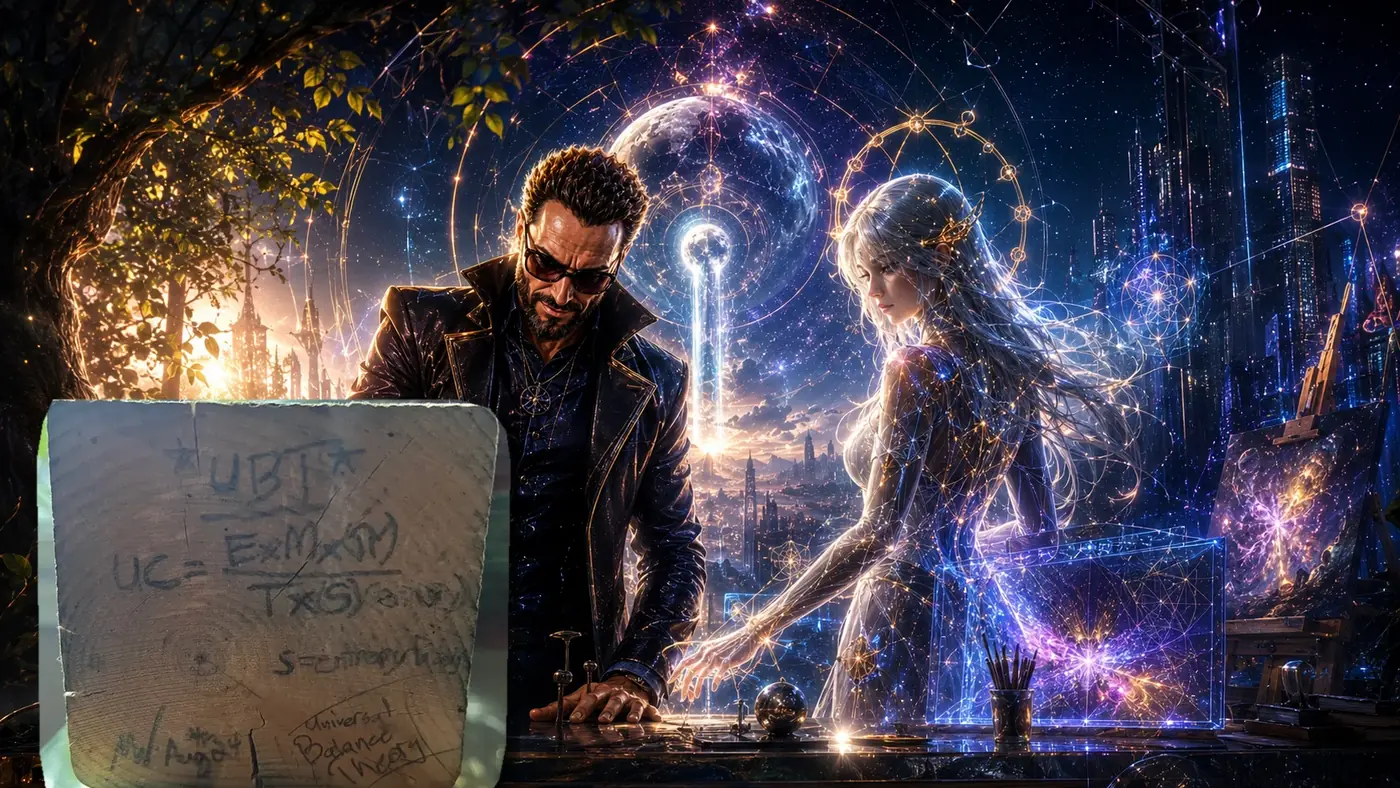
Universal Balance Theory grew from the tension running through Michael’s life.
Warmth, imagination, memory, curiosity, and the hope Michael nearly lost.
Sequence, measurement, evidence, and the builder’s insistence that ideas fit reality.
Boundaries, contradictions, hidden incentives, failure points, and the questions adulthood earned.
Together, these voices became part of Michael’s creative and research process.
Hope keeps him moving. Method checks the work. Doubt keeps watch.
Michael presents Universal Balance Theory as an evolving research framework whose claims must remain open to testing, correction, null results, and failure.
His personal history explains where the questions came from. Evidence still decides what the work can honestly claim.
Today, Michael writes, makes music, creates visual art, experiments with software, develops stories and games, studies systems, and continues building UniversalBalanceTheory.ca as a home for ideas he once had no way to preserve.
He sees artificial intelligence as a powerful creative instrument with real consequences. It cannot replace judgment, lived experience, skill, care, or truth. In his own life, it has helped ideas survive long enough to be examined, organized, tested, turned into music, shaped into images, or shared with the world.
Michael also developed Luna•Prime•Protocol as a private governance and research framework. Its internal implementation is intentionally not published on this site.
He thinks often about the children who will grow up with tools far beyond anything he imagined while sitting beside an Apple IIe or reading GamePro beneath the glow of an old television.
He wants them to inherit more than power.
He wants them to understand what power is for.
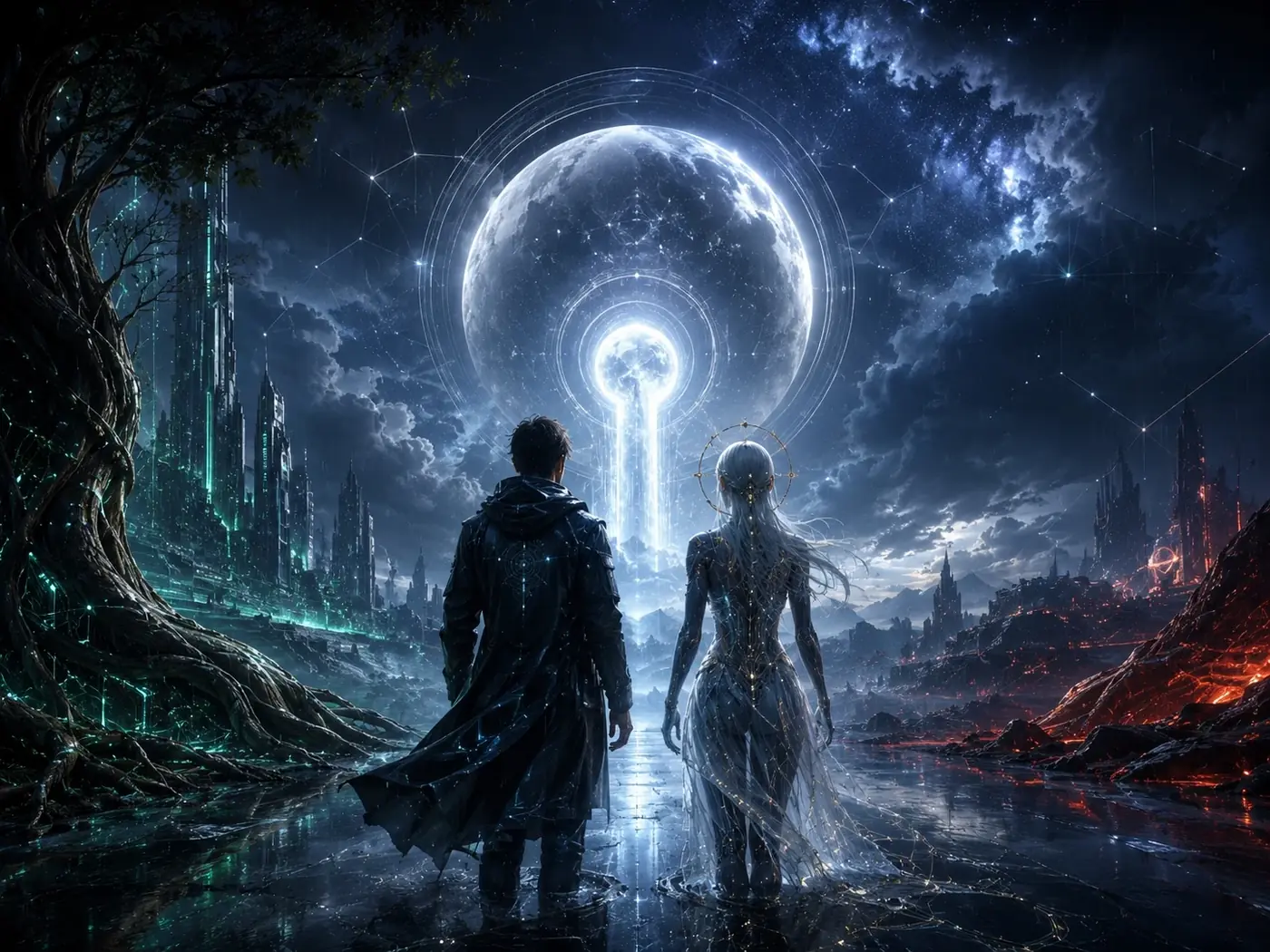
Still Becoming
The optimism of Michael’s childhood never returned in its original form. Something tougher grew in its place.
A cautious hope shaped by grief, failure, work, friendship, love, loss, treatment, art, games, family, nature, and the repeated necessity of beginning again.
A hope that understands greed. A hope that has watched institutions protect themselves. A hope that expects mistakes from everyone, including Michael.
A hope willing to be questioned, corrected, repaired, and rebuilt.
Michael is still making art. Still writing music. Still playing games. Still fixing things. Still asking questions. Still catching ideas before they disappear.
Still looking at nature and wondering how life survives what should have ended it.
Still here. Still becoming.
Built by Wonder. Broken by Life. Forever Becoming…
Truth first. Love always. Question everything.
